FROM IDENTITY GOVERNANCE TO GOVERNED SECURITY OPERATIONS.

PRODUCT ROADMAP

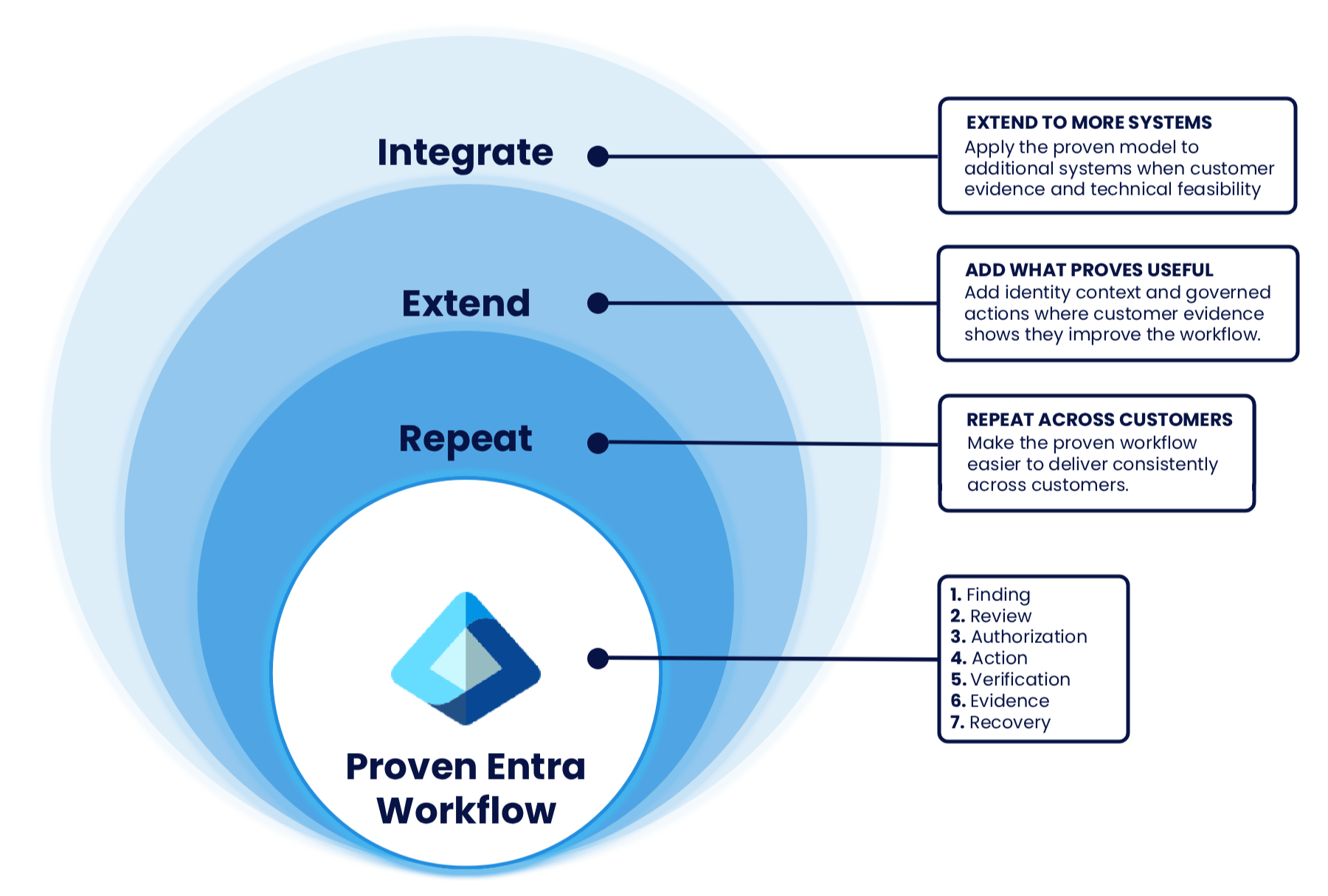
TPZ starts with identity and access governance, then expands into broader security decision support and governed automation across the systems your team already uses.

The scope expands, but the rule stays the same: people remain in control of what TPZ can do.

IDENTITY
Governance.

01

Blue horizontal arrow pointing to the right with the text 'Click here for more information' in black.

DECISION SUPPORT

Correlate · Recommend · Preserve Evidence

02

Blue arrow pointing to the right.

GOVERNED AUTOMATION

Approve · Execute · Verify · Recover

03

THREE STAGES. ONE PLATFORM DIRECTION.

ROADMAP AT A GLANCE

A simple view of how TPZ expands from identity governance into broader security decision support and governed automation.

Digital graphic with a blue location pin and a white text box reading 'WE ARE HERE' on a dark background.

01 BETA

Identity governance with human-controlled access decisions

Identity Governance

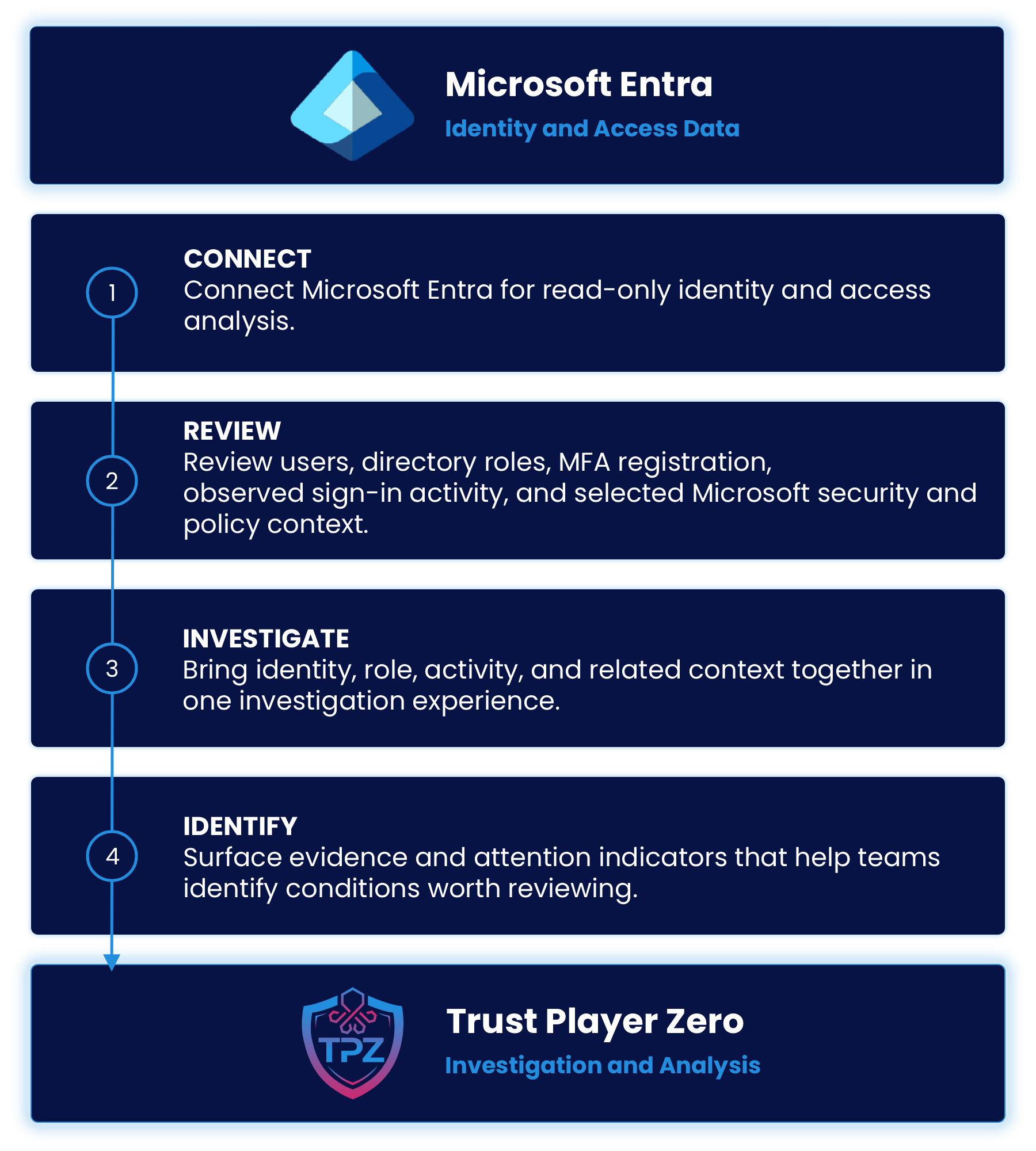
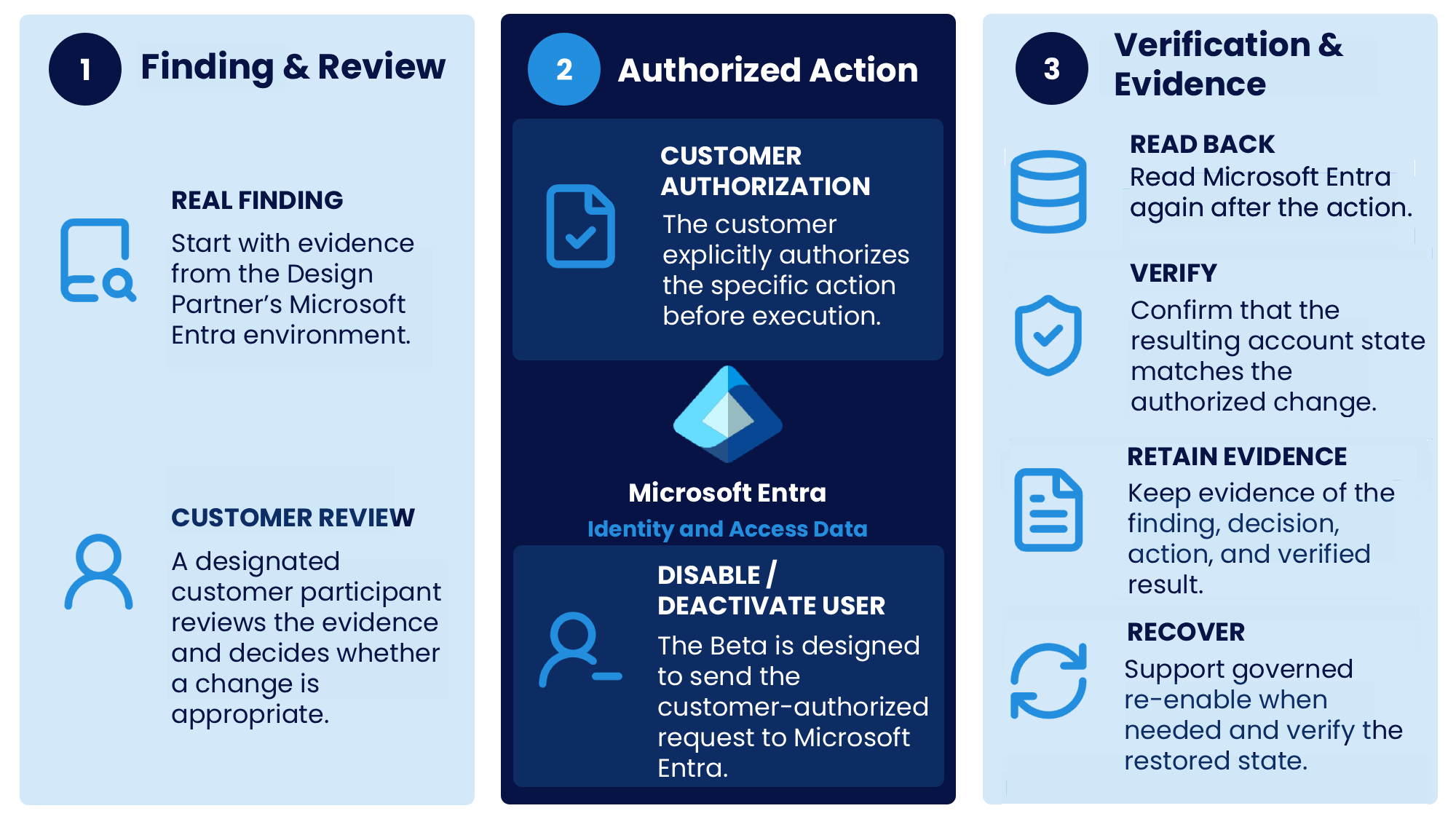
Connect → clean → review → verify.

Bring identity data together, surface access issues, guide reviews, and verify the result.

02
NEXT

Security decision support and contextual analysis

Security Decision Support

Correlate context → recommend → preserve evidence.

TPZ begins bringing more security context together and helping teams understand what should happen next.

03
LATER

Governed security automation with verification and recovery

Governed Security Automation

Govern → execute → verify → recover.

Once teams define clearer policies, formalize what requires approval, and preserve the evidence, TPZ can take on more execution within those boundaries.

02 Next

Connect more systems. Correlate the context. Recommend what comes next.

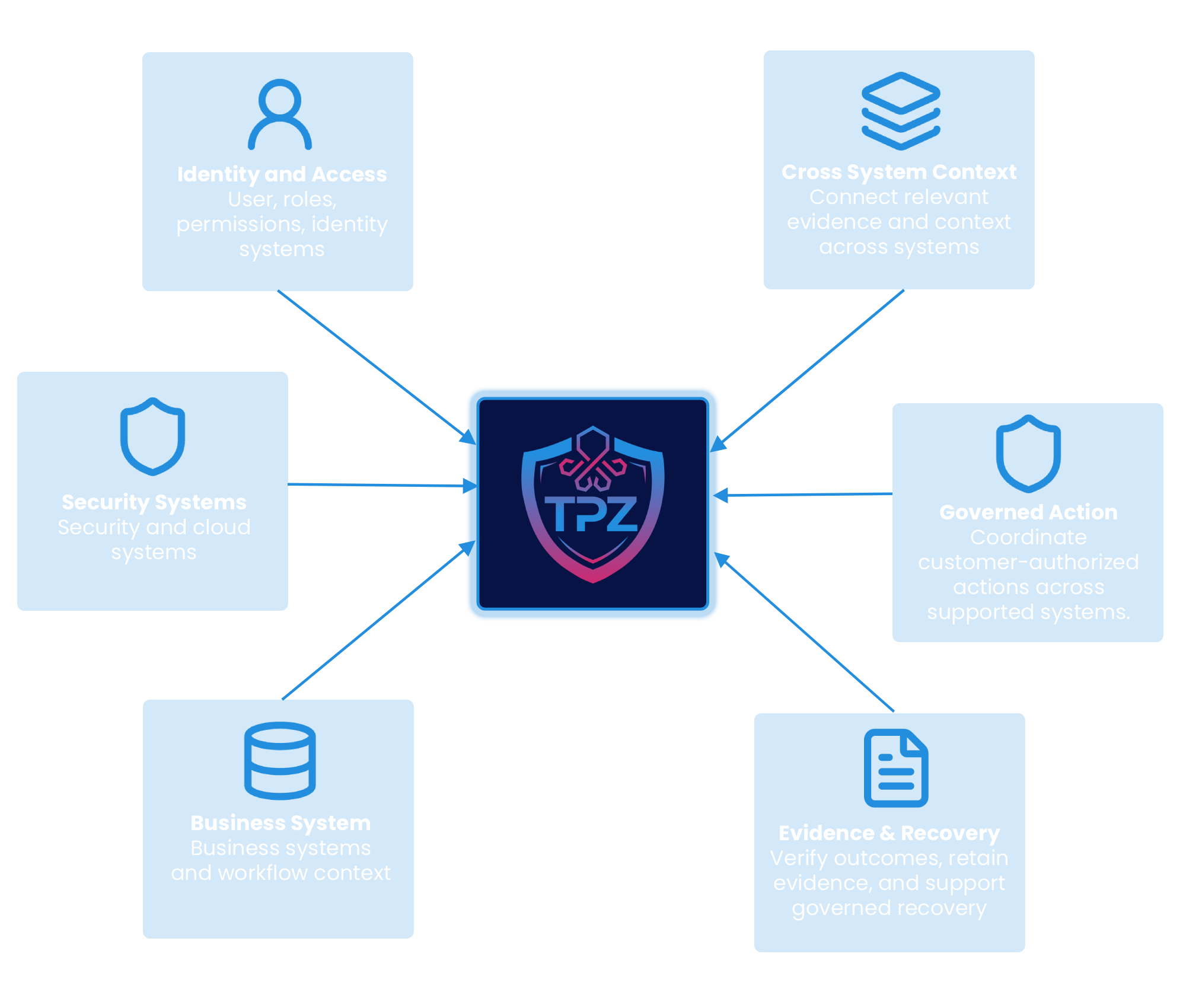
TPZ begins connecting more of the security environment so teams can see related context, decide what deserves attention, and keep the evidence with the decision.

Additional security system integrations and operating context

More Integrations

Bring additional security systems and operating context into TPZ.

Security recommendations and risk-based prioritization

Recommendations & Prioritization

Help teams understand what matters, why it matters, and what actions should be considered.

Cross-system identity, policy, event, and activity correlation

Cross-System Context

Connect identities, policies, events, signals, and activity that currently live in separate systems.

Security decision evidence, approvals, and outcome tracking

Evidence & Decision Support

Keep the reasoning with the work, including what TPZ recommended, what people approved, and what happened.

Identity is the first operating domain.

Future expansion is designed to bring additional security systems and domains into the same governed operating model.

03 Later

FROM DECISION SUPPORT TO CONTROLLED EXECUTION.

As teams establish clearer policies, approvals, and evidence, TPZ can take on more execution within those boundaries.

Authorized security actions executed into connected systems

Approved Write-Back

Allow authorized actions to be executed into connected systems.


Bounded Automation:

Bounded Automation

Automate approved classes of work within defined permissions, policies, and limits.


Security operations adapting to changing conditions and trust context

Adaptive Operations

Allow TPZ to respond as conditions and trust context change.


Verification of security outcomes with rollback and recovery support

Verification & Recovery

Confirm outcomes, identify drift or failure, and support rollback or recovery when needed.


BUILT ON PATENT-PENDING ARCHITECTURE.

TECHNICAL FOUNDATION

TPZ’s broader product direction is supported by a patent-pending system architecture designed around governed trust execution, evidence, bounded automation, and recovery.

The patent-pending architecture includes concepts spanning runtime trust execution, consent-bound enforcement, ledger-backed evidence, reflex-based automation and rollback, and identity-centric trust computation.

PATENT PENDING

Explore the architecture behind TPZ.

Read more about the technical concepts informing how TPZ is designed to govern decisions, execution, evidence, and recovery.

Governed Trust Execution

Decisions and actions are bounded by policy, context, and consent.

Ledger-Backed Evidence

Maintain verifiable records of decisions, actions, and outcomes.

Consent-Bound Enforcement

Actions are authorized, scoped, and revocable.

Reflex-Based Automation & Rollback

Respond and recover as conditions and trust context change.

Identity-Centric Trust Computation

Trust is evaluated using identity, behavior, risk, and relationships.

NEXT STEPS

WANT TO HELP SHAPE WHAT COMES NEXT?

Work with TPZ on real identity and access-governance challenges today while helping inform the platform we’re building toward.

Questions about the roadmap? Visit the FAQ →