
Black Ink: identity and access security
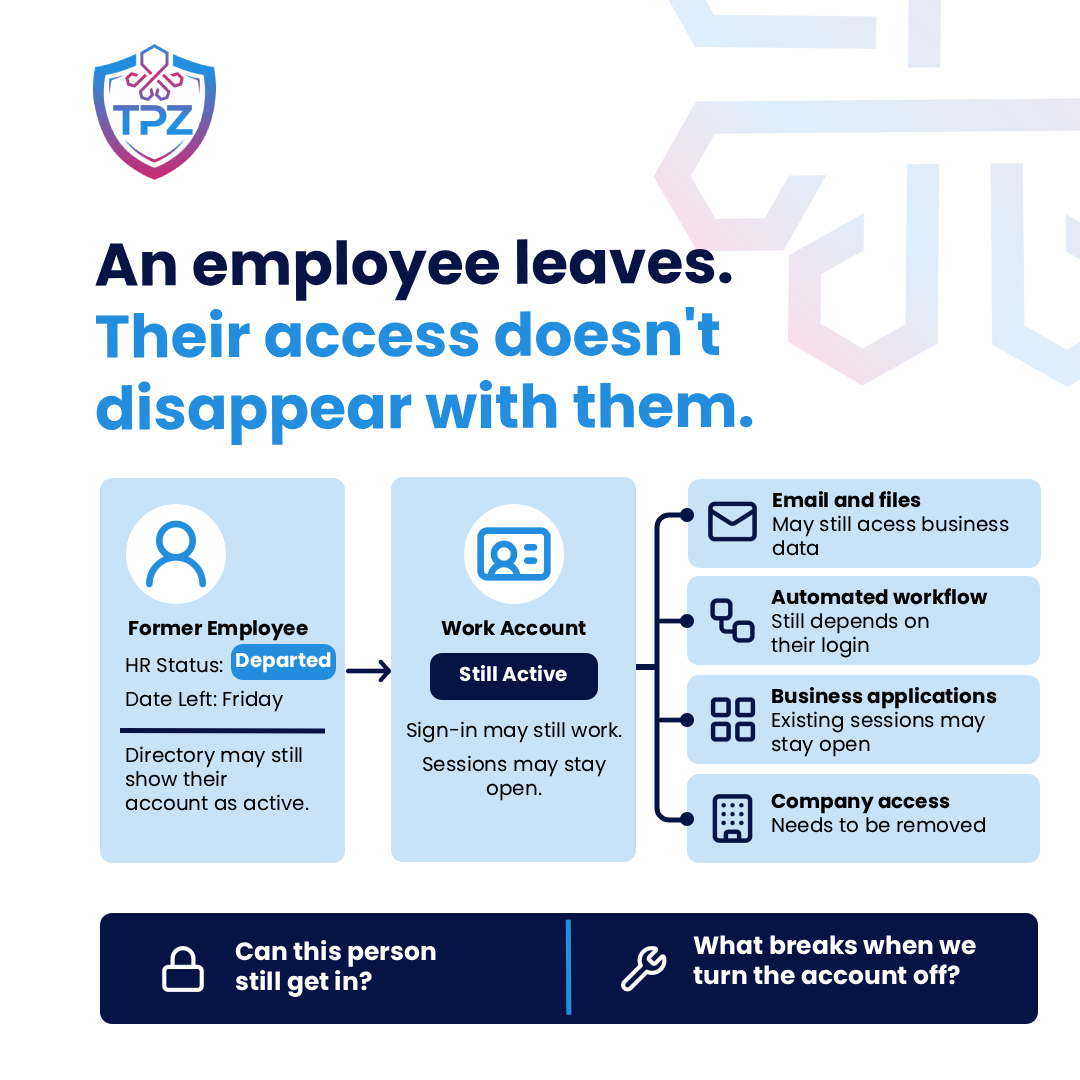
What Actually Happens After Cybersecurity Finds a Problem?
When an employee leaves, disabling the account is only the first step. Access can linger, workflows can break, and someone still has to confirm the change actually worked.
Why Security Turns Into Whack-a-Mole
Security work can feel like whack-a-mole when findings, decisions, changes, and verification happen across disconnected systems. This article looks at the manual work between security tools and why resolved issues can keep resurfacing.
Governance Economics, Part 2: Measure the Work, Not Just the Spend
Governance has an operating cost that rarely appears in one budget. Part 2 looks at where work stalls, how long decisions take, whether fixes are verified, and where teams end up doing the same work twice.
Governance Economics, Part 1: The Hidden Cost of Security Governance
Governance costs more than the compliance budget suggests. This article looks at the manual work, delays, and repeated follow-up that make security governance expensive.
Where Governance Gets Expensive
Governance gets expensive when teams have to chase context, wait for decisions, revisit exceptions, rebuild evidence, and verify work that was supposedly finished. Here are seven places that cost tends to hide.
Operational Zero Trust
Follow an identity or access decision from evidence and review through authorization, source-system verification, and the record that remains afterward.
Trust and automation.
Security automation can gather evidence and carry out defined tasks, but authority still needs boundaries. This article looks at human review, authorization, verification, and recovery before software is allowed to act.
Identity Access Management is hard.
Identity and access management gets harder as people change roles, permissions accumulate, and business context lives across different systems.
Seeing Risk Is Not the Same as Governing It
Seeing a security condition is only the beginning. Governance determines who reviews it, what evidence matters, who can authorize a response, and what record remains afterward.