

Network Architect | Enterprise Strategy
Trust Operating System:
A deterministic system that governs infrastructure like code.

MEASURE
Collect Signals and compute metrics.

DECIDE
Reflex evaluates context policy and risk.

ENFORCE
Layer 9 executes actions.

PROVE
Evidence is signed, hashed, and recorded.

LEARN
Feedback improves policies, thresholds and automation.
From Fragmented Domains to a Unified Control System
Traditional enterprises operate as loosely coupled domains:
Identity
Network
Cloud
Applications
Governance
Each domain:
Has its own controls
Its own policies
Its own telemetry
Its own failure modes
This leads to a fundamental problem:
Trust is inconsistent because it is enforced differently across domains.
ANDEVER’s core transformation:
Traditional Enterprise Model
Identity | Network | Cloud | Apps | Governance
↓ ↓ ↓ ↓ ↓
Independent Controls (fragmented, inconsistent)
ANDEVER as a System-of-Systems Model
Unified Trust Fabric
↓
Single Control Loop Governing All Domains
No domain operates outside the trust loop.
The 9-Layer Unified Architecture of ANDEVER.
This is the canonical execution stack, applied universally.
Layered Architecture Matrix
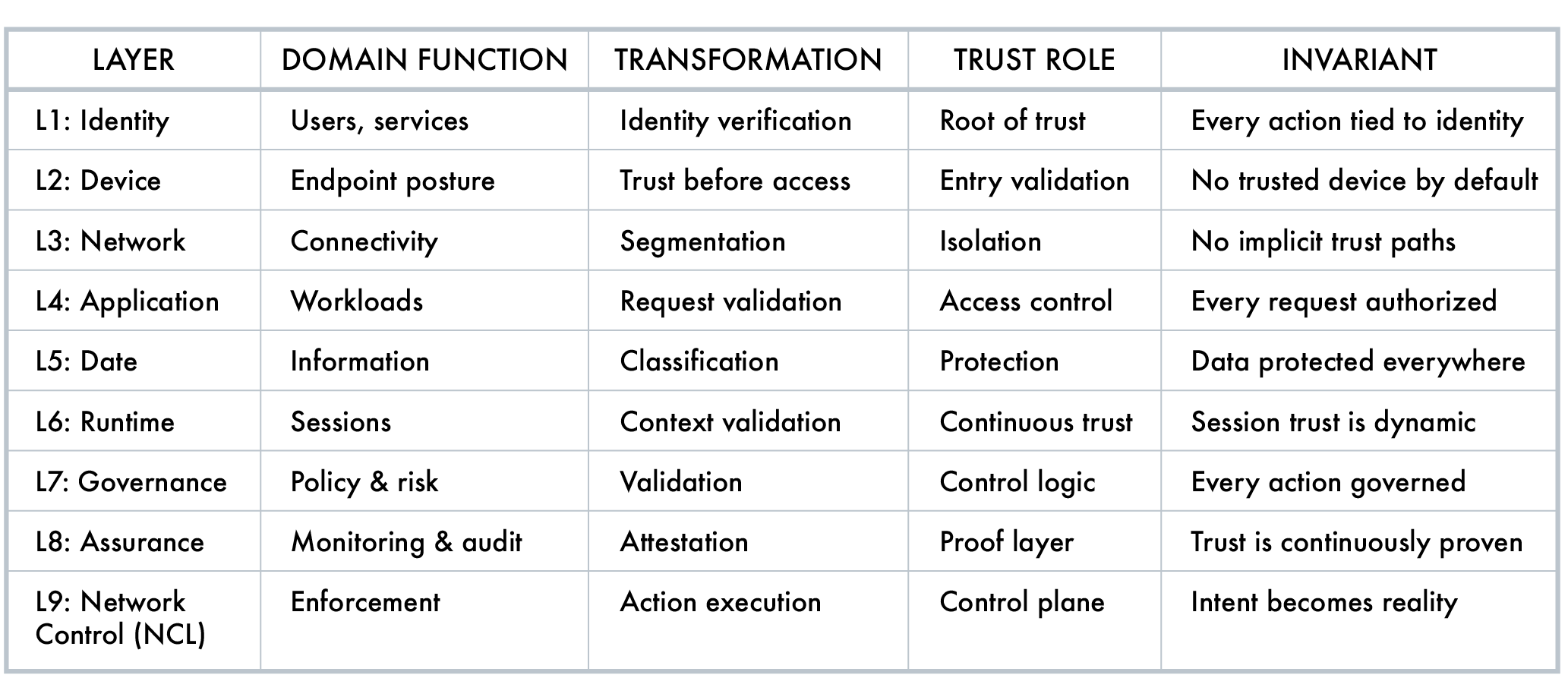
Core Insight:
L1–L6 = Context
L7–L9 = Control
Are a “Unified Trust Fabric”
The Core Principle
Every domain feeds the same control loop and receives enforcement from the same control plane.
Cross-Domain Matrix
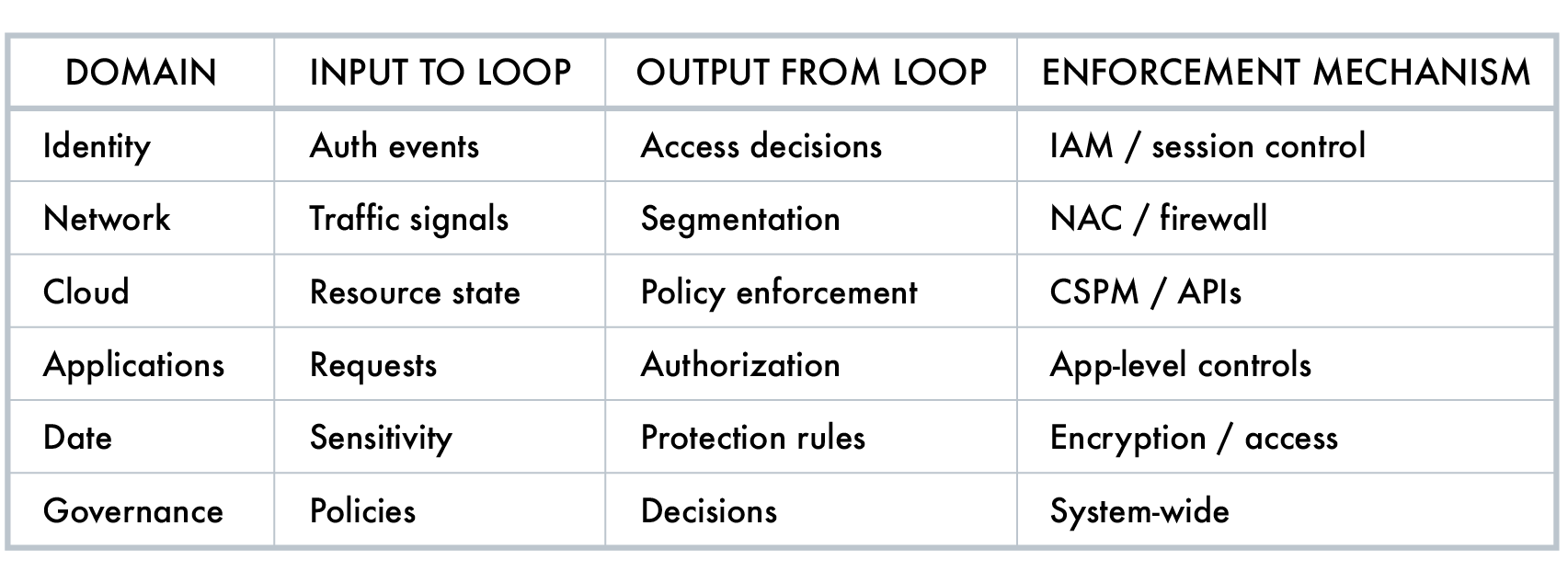
All domains are both signal producers and enforcement consumers.
Closed-Loop Control System (ANDEVER’s Global System Behavior)
This is the unifying mechanism across all domains:
Measure. Decide, Enforce, Prove, Learn.
Closed-Loop Matrix
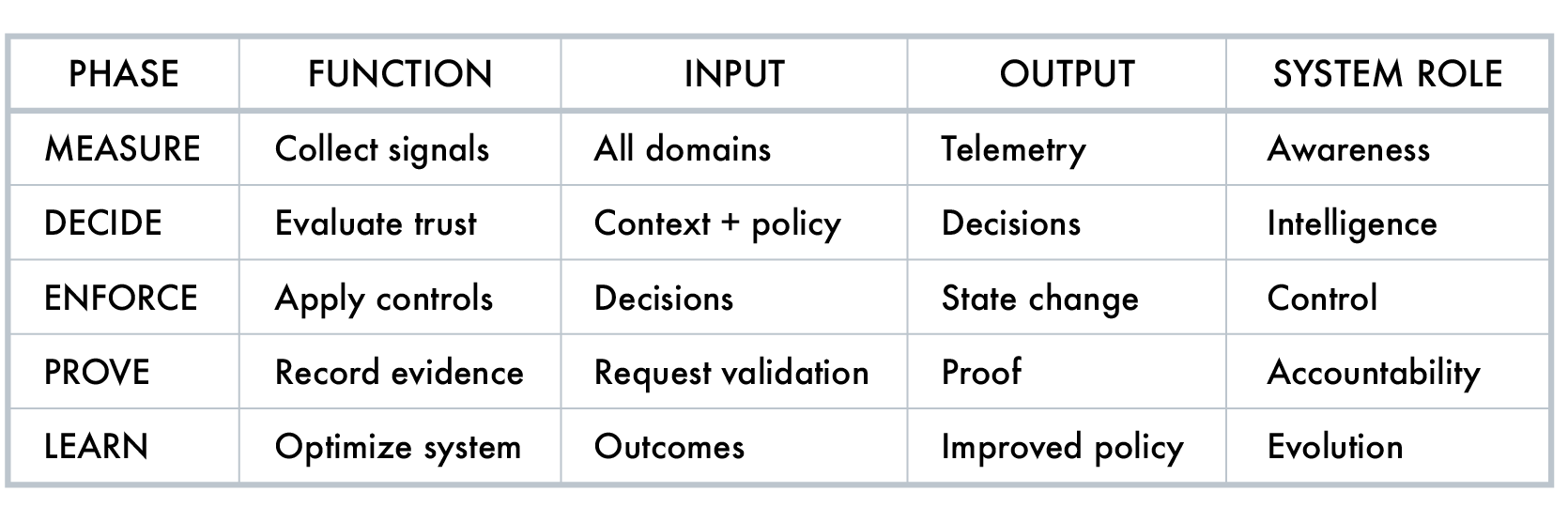
The system governs itself through continuous feedback across all domains.
Cross-Domain Enforcement Model
ANDEVER Example Mapping
One decision: multiple coordinated enforcement actions across domains
Tier 2 Domain Integration Matrix
These domains extend the trust fabric:
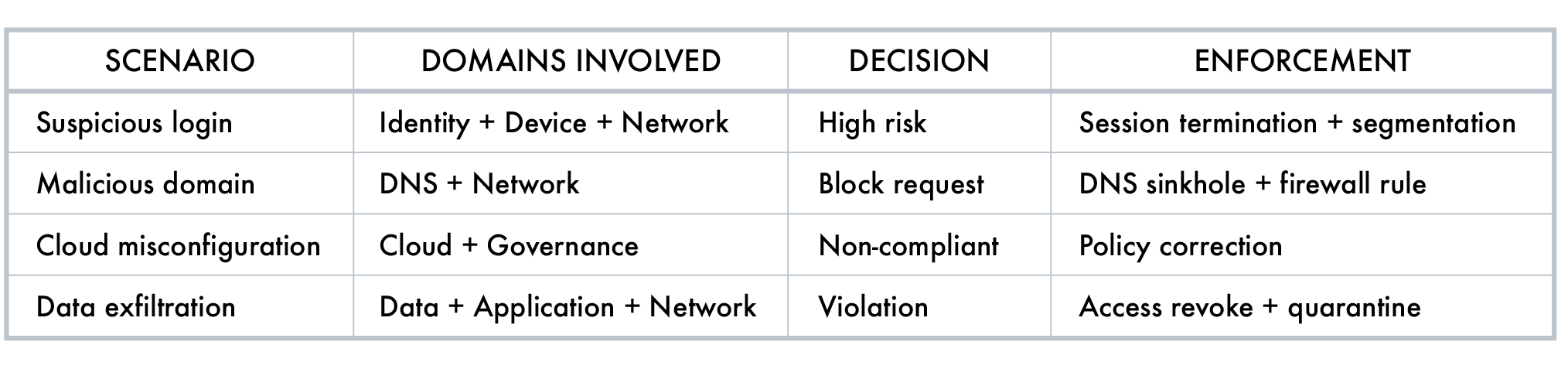
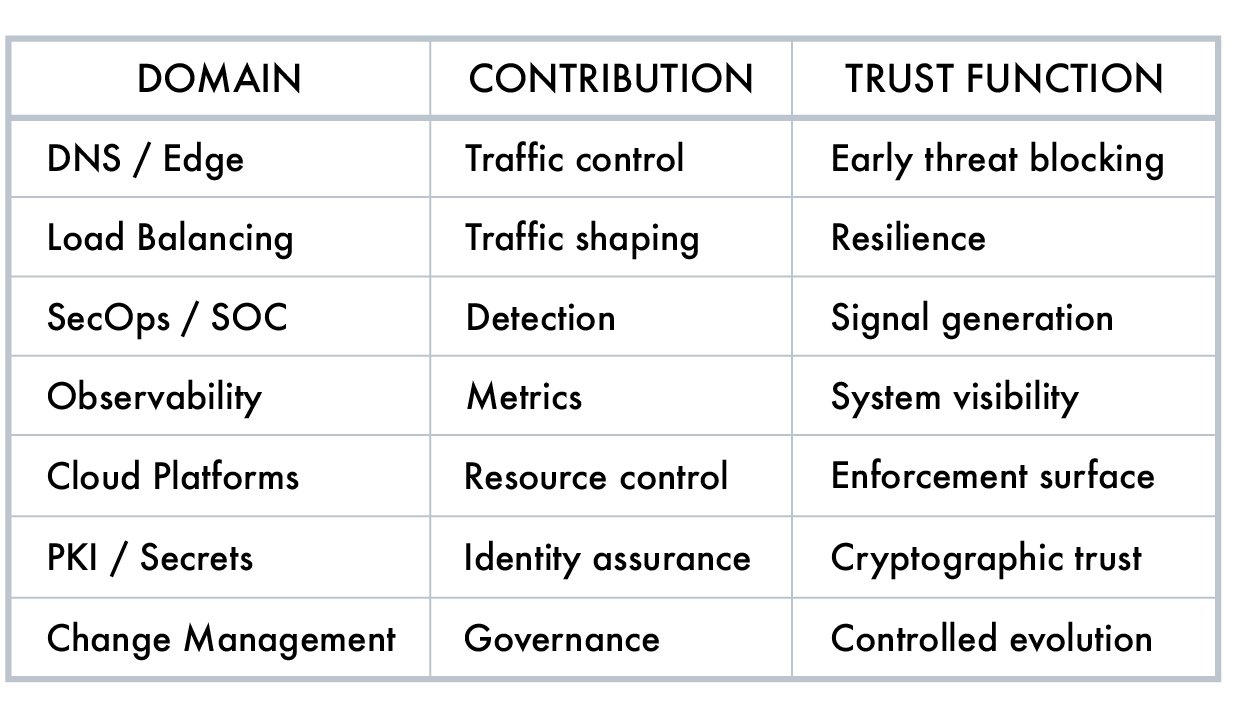
Every domain is a contributor. No domain operates in isolation.
Strategic Business Outcomes Matrix
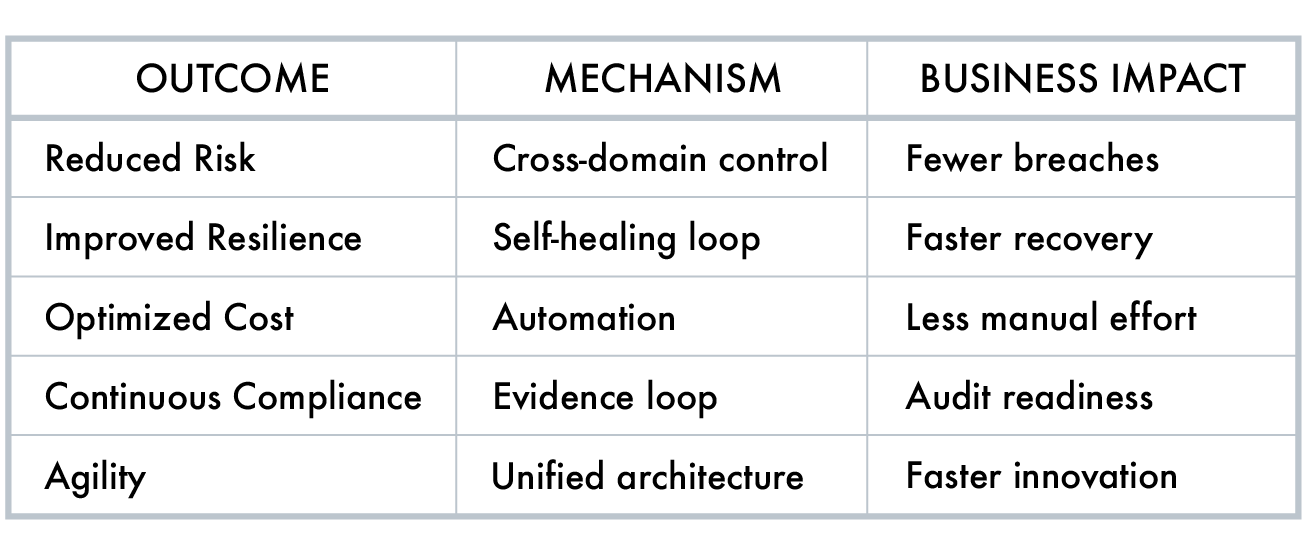
Proof Model
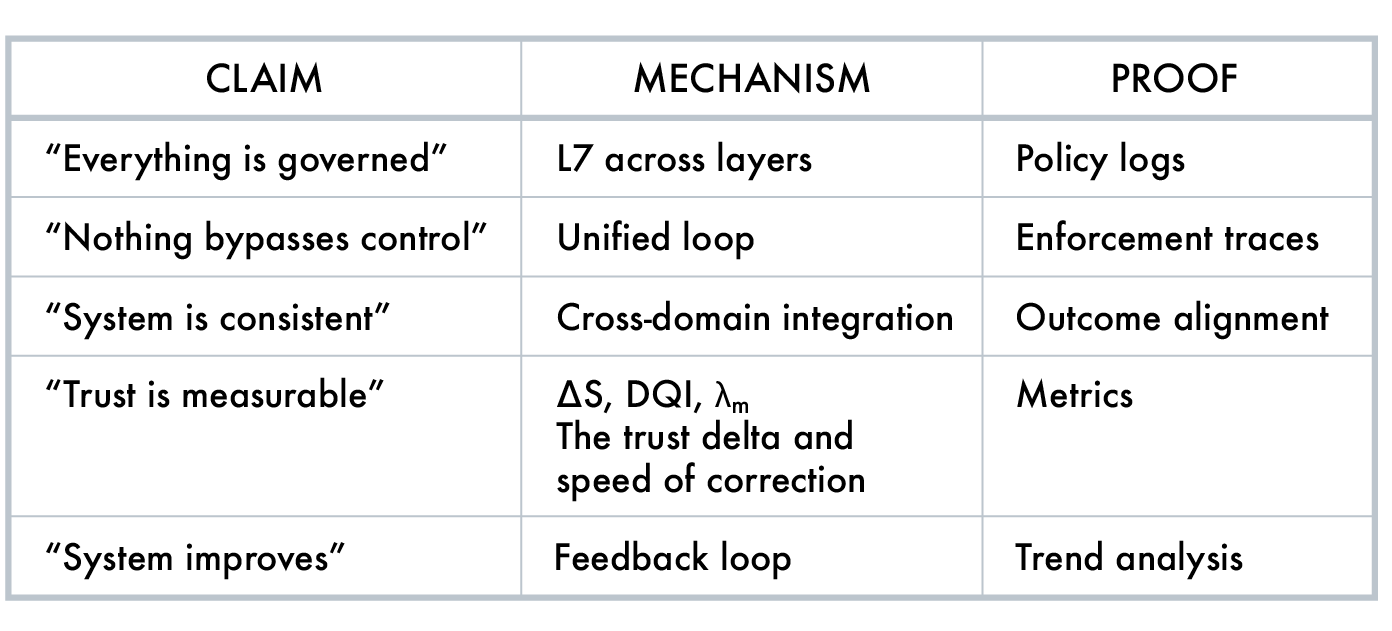
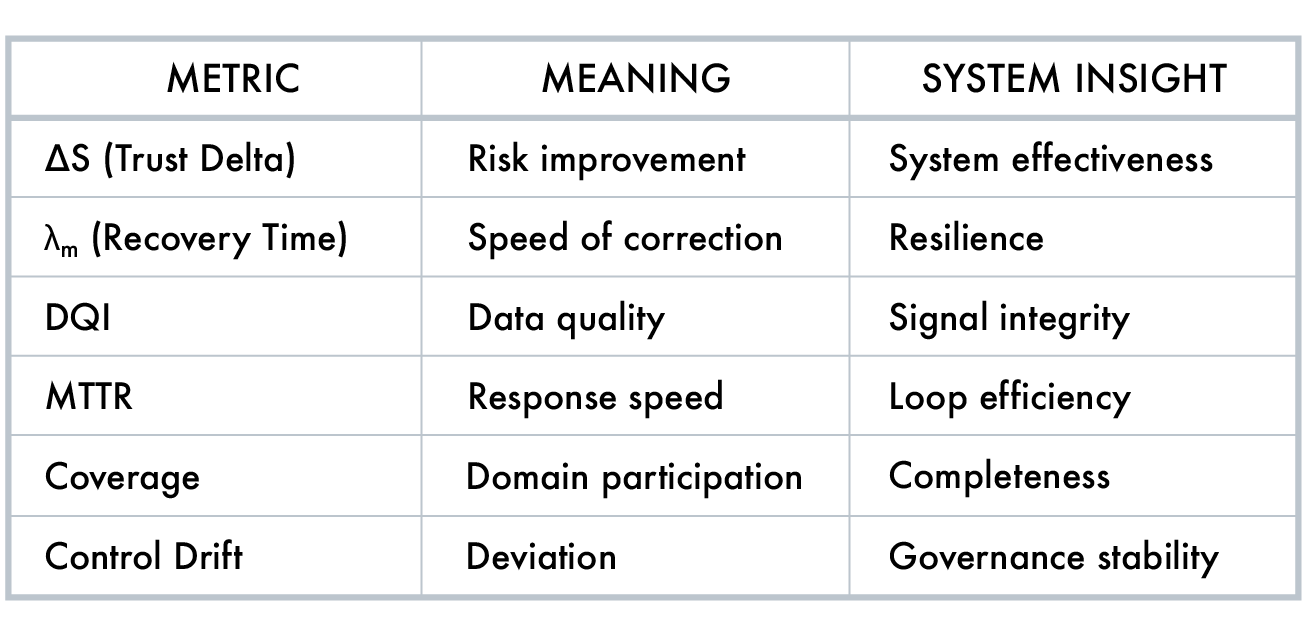
Trust Metrics Matrix (System Health)
One system.
One loop.
All domains.
Every domain produces signals.
Every signal drives a decision.
Every decision is enforced everywhere.
This is the first architecture where nothing operates outside the trust loop.